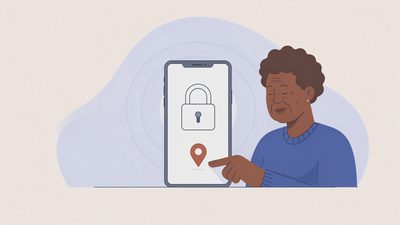
The phone rings and a parent’s voice is already tight. “Someone from the bank just called. They said there’s a problem with a transfer. They want me to confirm a code.”
In that moment the technical steps matter, but the first sentences matter more. Parents who feel foolish or rushed are more likely to stay on the line with the original caller or to freeze and do nothing. A calm, specific script keeps the focus on the next safe action.

The core sequence
Get them off the suspicious call if they are still on it.
Praise the fact that they called you.
Walk them to the real bank number.
Stay with them through the verification.
Document what happened afterward.
Everything else is secondary.
Scripts that work in the first minute
If they are still on the line with the caller:
“I’m glad you called me. Hang up right now. Don’t press any buttons. We’ll call the bank ourselves using the number on your card.”
If they already hung up but are worried they said too much:
“You did the right thing by calling me. We’ll check with the real bank line. Whatever you told the first person, we can sort it out from here.”
If they feel embarrassed:
“These calls are designed to sound real. You’re not the first person in the family to get one. Let’s just verify everything the safe way.”
Avoid “You should have known” or “That was obviously a scam.” Those phrases increase shame and reduce cooperation.
Language that interrupts the attacker’s script
The first script is deliberately short and directive. “Hang up right now. Don’t press any buttons” gives clear actions that can be followed even while adrenaline is high. Adding “I’m glad you called me” in the same breath reinforces that seeking help was the correct move.
Language that repairs after partial disclosure
When a parent has already shared a code or personal detail, the second script focuses on the next controllable action rather than on what was lost. “We can sort it out from here” keeps the parent engaged instead of withdrawing into regret. The technical recovery can still succeed; the relational recovery makes it more likely.
Language that normalizes the experience
Scam calls are engineered to sound legitimate. Telling a parent that the call was designed to sound real, and that others in the family have received similar ones, reduces the sense of personal failure. Normalization is not minimization; it is an accurate description that frees attention for the verification steps.

Walking them through the real callback
Once they are off the suspicious call:
“Look at the back of your debit card or open the bank app. We’ll use only the number printed there. I’ll stay on the phone with you while you dial.”
If they want you to call for them:
“I can call the bank with you on the line, or you can dial and I’ll listen. Either way we use the official number only.”
During the call with the real bank, encourage them to say:
“I received a call claiming to be from the bank. I hung up and I’m calling the number on my card to verify.”
That single sentence gives the representative the context they need.
Keeping the parent in the primary role
Whenever possible, the parent should be the one speaking to the bank. This preserves their sense of control and ensures the bank hears the account holder’s own description of events. Offering to dial or to stay silent on speaker supports without taking over.
The value of the exact opening sentence
“I received a call claiming to be from the bank. I hung up and I’m calling the number on my card to verify” immediately signals to the representative that this is a potential social-engineering incident rather than a routine inquiry. Many fraud desks have specific protocols that activate once that context is clear. Coaching the parent to use a version of that sentence improves the quality of the help they receive.
Staying present without taking the call
Even when the parent dials and speaks, remaining on the line provides a steadying presence and allows quick clarification if the representative asks for details the parent cannot immediately recall. Presence is support; silence is not abandonment.
After the bank confirms the account status
Help them write down:
The time of the original suspicious call
Any number that appeared on the caller ID
What the caller asked for
The reference number from the real bank conversation
Then decide together whether any passwords or one-time codes need changing. If the parent entered anything, change those credentials from a device you both trust.
When the parent lives far away
The same script works over the phone. Add one practical line:
“Keep your bank card in front of you. We’ll look at the number together. I’m not going anywhere until we finish the real call.”
If they are highly distressed, offer to stay on the line even after the bank call ends, just to talk through the next ordinary steps of the day. The emotional landing matters.
Adapting the script for distance
Remote help removes the ability to physically point to the card or the app. Explicitly asking the parent to place the card in front of them and confirming they can see the number restores a shared visual reference. Stating “I’m not going anywhere until we finish” counters the isolation that distance can amplify under stress.
Extending presence beyond the technical resolution
Once the bank has confirmed the account is clean, a few additional minutes of ordinary conversation help the parent return to a normal emotional state. The technical problem is solved; the residual anxiety often is not. A calm close to the call is part of the complete response.
Preparing the remote tools in advance
Having the official bank number already saved in both phones, and knowing where the parent keeps the physical card, turns a distant crisis into a manageable sequence. Those preparations belong on the calm-day checklist rather than being invented during the call.
Building the habit before the next call
The best time to practice is when nothing is wrong. On a calm day, look at the bank card together and save the official number in their contacts under the bank’s real name. Show them where the account PIN is recorded on the household emergency sheet. Familiarity reduces panic later.
Practice as inoculation
A short, low-stakes walkthrough of locating the official number and saving it in contacts makes the real event feel familiar rather than entirely new. The parent who has already performed the motions once is more likely to complete them under pressure.
Linking the practice to the emergency sheet
Showing the parent where the carrier PIN and bank support numbers live on the household sheet connects the individual account to the broader recovery system. The sheet becomes a known object rather than a theoretical document.
Repeating the practice after any change
A new bank card, a new phone, or a change in primary contact information is a natural moment to repeat the short practice. Each repetition strengthens the habit and keeps the recorded numbers current.

What this does not mean
Using a script does not mean treating parents like children. It means giving them clear language when their own words are hard to find under stress. Most parents appreciate the structure once they experience how much calmer the outcome is.
Scripts as support, not control
The scripts exist to supply language when stress has temporarily reduced the parent’s ability to generate clear sentences. Once the immediate danger is past, ordinary conversation resumes. The goal is a successful verification, not a permanent change in the adult-to-adult relationship.
Respect remains the foundation
Every script begins with acknowledgment that the parent acted correctly by calling. That stance preserves dignity and makes continued cooperation more likely. Scripts that begin with correction or blame tend to produce resistance or withdrawal.
The measure of success is a calm, verified outcome
When the real bank confirms the account status and the parent feels steady enough to return to ordinary activities, the sequence has succeeded. Technical perfection is secondary to a protected account and an intact relationship.
The next safe step
Call or text a parent today and ask them to look at the back of their main bank card with you. Save the official customer-service number in their phone together. That single stored number is the foundation of the script.
Take the next safe step.