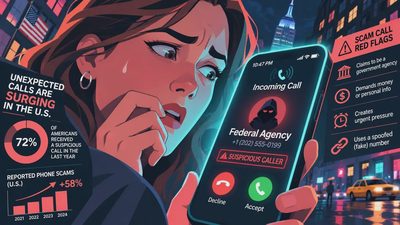

A scam call can leave even a careful person frozen, embarrassed, or unsure whether a real account is at risk. The safest first move is simple: end the conversation. Do not argue, press buttons, share a verification code, or call back using the number on the screen. A scam call is designed to create urgency, so slowing the situation down gives you control again.
If money, login details, or personal information were shared, do not wait for certainty before taking action. Write down what happened while the details are fresh, then contact the organization through an official app, statement, website, or card. Take the next safe step rather than trying to solve the entire incident in one sitting.
What to do in the first five minutes
When a scam call is still happening, say, “I do not handle account issues on incoming calls. I will contact the organization directly.” Then hang up. A legitimate bank representative, government office, delivery company, or medical provider should not need you to stay on an unexpected call while you transfer money or reveal a one-time code.
Look at what was actually shared. There is a meaningful difference between confirming your name and giving away a Social Security number, debit card number, password, or authentication code. Do not assume that a caller knows private details just because they mention your address, a family member, or the last four digits of an account. Those details can come from public records, data breaches, or old marketing lists.
If the caller claimed to represent your bank, use the phone number printed on your debit card or found inside the bank’s official app. Do not use a number provided during the call. For a health plan, school, retailer, or delivery service, open the organization’s website yourself instead of following a text message or email link.

Save evidence before deleting anything
A scam call becomes easier to report when you preserve basic evidence. Take a screenshot of the incoming number, save voicemails, and write the date, approximate time, caller’s claimed organization, requested action, and any payment instructions. If a text or email followed the call, keep the original message. Avoid replying, clicking links, or forwarding suspicious material to friends as a warning.
Caller ID is not proof of identity. Spoofing can make a call appear to come from a local number, a bank, a police department, or even your own number. The displayed number still helps establish a timeline, but it does not confirm who called. If the person left a callback number, record it without dialing it.
Keep notes factual rather than self-critical. “Caller requested a $1,200 gift card payment and a six-digit code” is useful. “I was careless” is not. Clear notes help a bank employee, carrier, or investigator understand the sequence quickly.
Protect money and accounts
If you gave a debit card number, call the bank immediately using an official number. Ask whether the card should be locked or replaced and whether any transactions are pending. If an unauthorized electronic transfer occurred, report it promptly and ask what documentation the bank needs. Credit card protections and debit card procedures differ, so describe exactly what happened rather than guessing what category applies.
If you shared a password, change it from a device you trust. Start with the affected account, then change any other account that reused that password. Use a unique password or passphrase, and turn on multifactor authentication through an authenticator app or security key when available. A code sent by text is still useful, but it should never be read to an unexpected caller.
A scam call does not automatically mean the caller controlled your phone or emptied every account. Focus on the information actually exposed. If you only answered and hung up, you usually do not need to replace your phone or reset every password. The practical response is to block the number, watch for follow-up attempts, and remain alert for related messages.
How to help a parent without blame
Many families manage this moment badly by opening with, “How could you fall for that?” Shame makes people hide details, which can delay account protection. Try, “These callers are trained to sound convincing. Let’s write down what happened and make one call together.” That sentence keeps the person talking and turns the incident into a shared household task.
Create a simple rule for relatives: unexpected callers never receive passwords, access codes, payment card details, remote-computer access, or permission to move money. The person can always hang up and call back through a trusted channel. Put this rule on a paper incident card near the phone, especially for someone who becomes flustered during urgent conversations.
If a parent sent money, avoid promising that recovery is guaranteed. Call the bank, payment app, wire service, gift card issuer, or cryptocurrency platform as soon as possible. Ask what reversal or fraud-reporting options exist. The faster the report, the more useful the transaction details may be.

Recognize common caller pressure tactics
A scam call often combines authority, urgency, and secrecy. The caller may claim that an account is frozen, a package contains illegal items, a loved one is in trouble, or a computer has a dangerous infection. The story changes, but the requested behavior is similar: stay on the line, keep the matter secret, and act before you can verify it.
Real organizations do make outbound calls, but that does not make an unexpected request trustworthy. A bank may contact you about fraud, yet you can still end the call and use the official number. A government agency may send notices, but an unexpected demand for gift cards is a major warning sign. Anyone insisting that you cannot verify the request is giving you a reason to stop.
Do not call a loved one using a number supplied by the caller. Contact that person directly or reach another trusted family member. For an alleged emergency, verify the story independently before sending money or sharing information.
Report, monitor, and reduce repeat calls
Report fraud to the Federal Trade Commission at ReportFraud.ftc.gov. If the call involved threats, impersonation, or an immediate safety concern, contact local law enforcement through its non-emergency number, or call emergency services when there is an immediate danger. Your phone carrier may also offer call-blocking tools, and built-in iPhone or Android settings can silence or filter unknown callers.
For the next few weeks, review bank and credit card activity, email security alerts, password-manager notifications, and mobile-carrier account changes. Watch for a second contact pretending to be a refund department or fraud investigator. This follow-up is common because criminals know that a recent victim is already expecting help.
Use a household verification phrase for urgent family requests, and teach children not to approve purchases or share codes on an adult’s behalf. Keep account recovery numbers current, install operating-system updates, and consider a credit freeze if sensitive identity information was exposed. A freeze is free through the three major credit bureaus and can help prevent new-credit applications in your name.
The goal is not to identify every suspicious call perfectly. It is to make urgent requests pause, verify independently, and involve another trusted person. If you answered a scam call, you are not required to prove anything to the caller. Hang up, preserve the facts, protect the account that matters, and take the next safe step.