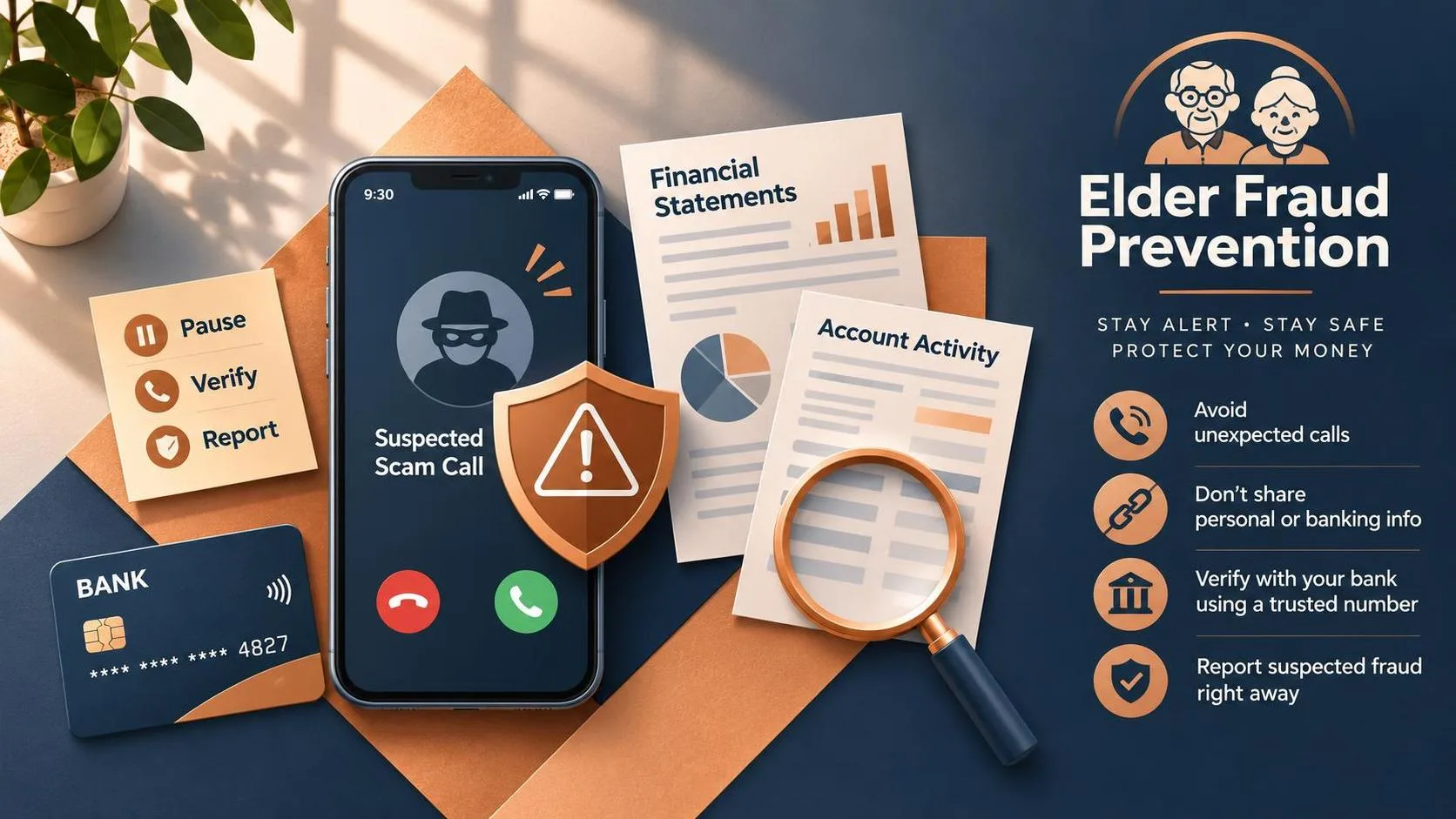
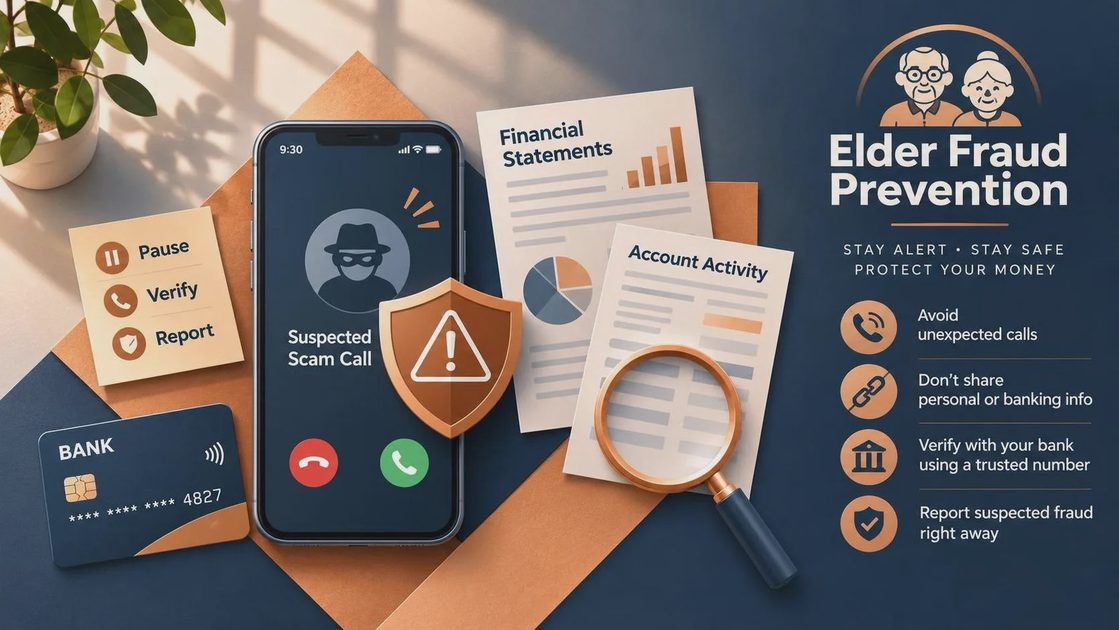
If you suspect elder fraud is happening right now, pause the conversation or transaction, then contact the bank or payment provider using a number you independently trust. Don’t call back the number in the suspicious message. If someone is in immediate physical danger, call 911. Take a breath: the goal is to interrupt the payment and get help, not to decide in the first five minutes exactly what happened.
Elder fraud is financial deception or exploitation directed at an older adult. It can involve a stranger posing as tech support, a fake investment opportunity, or someone the person knows misusing access to money. A convincing request can fool anyone. Being older does not mean someone is unable to make decisions, and needing help with a scam does not mean giving up control of an account.
First, stop the payment and preserve the details
Ask the person to stop responding to the suspected scammer. If a transfer is underway, contact the bank, card issuer, payment app, wire company, or cryptocurrency exchange immediately. Use the number on a bank card, a statement, or the company’s official website or app. Tell the representative what happened and ask whether the payment can be stopped, recalled, disputed, or flagged. Recovery is not guaranteed, but asking quickly matters.
Try this: “We may have authorized a payment because someone impersonated your fraud department. Can you help us secure the account and check whether the transfer can be stopped?” Have the account holder make the call or join it when possible; the institution may need their permission before discussing details with you.
Save texts, emails, receipts, transaction IDs, phone numbers, account names, and screenshots. Write down when the contact happened and what was shared. Don’t delete messages or wipe a device before preserving useful evidence. Store copies somewhere the suspected scammer cannot access, and avoid forwarding sensitive account numbers around the family group chat.
If cash, a check, or a gift card was involved, contact the relevant bank, delivery service, store, or gift card issuer promptly. Keep the card and receipt. If someone is coming to collect money, don’t confront them; contact local law enforcement. For a check mailed through the postal service, contact the postal service and the bank to ask what options remain.
Recognize common elder fraud patterns
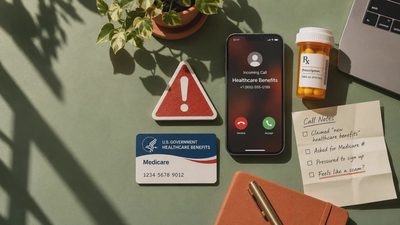
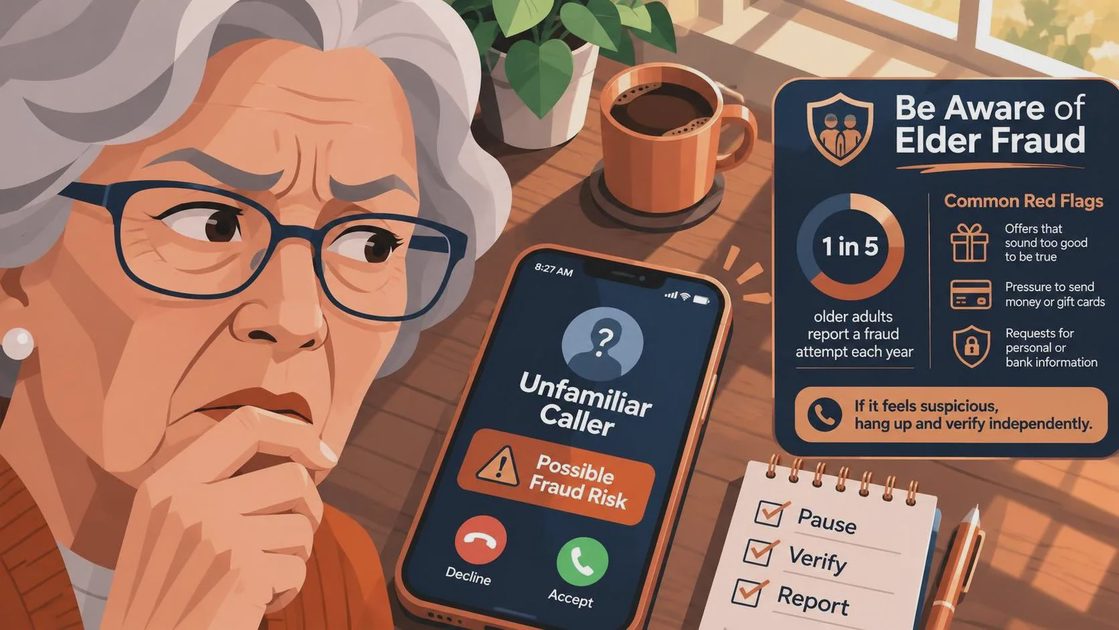
The details change, but many schemes rely on urgency and secrecy. A caller may claim a grandchild needs bail, a bank account is compromised, or a government benefit will stop unless money moves immediately. End the call and verify the story using a known number. A caller ID display, a familiar voice, or a message containing personal details is not proof of identity.
Tech support scams often begin with a frightening pop-up or an unsolicited call. The person may be told to install software that gives someone remote control of the computer. If that happened, disconnect the device from the internet and contact a reputable technician or the device maker through an independently verified channel. Use a different, trusted device for banking and password changes until the affected device has been checked.
Elder fraud can also involve a caregiver, relative, or other trusted person taking money without permission or pressuring someone to sign documents. Keep records of the concerning transactions and seek help from Adult Protective Services or an attorney. If the suspected person controls the phone, mail, or transportation, use a safe way to make contact and avoid warning them before discussing a safety plan with a professional.
A suspicious request does not automatically mean every account or device has been compromised. Focus on what the person actually shared, clicked, installed, or paid; that determines the next response.
Secure the accounts and identity involved
If a password was disclosed, change it from a trusted device. Start with the email account, because email is often used to reset other passwords, then secure affected financial and shopping accounts. Use a different password for each account and enable multi-factor authentication where available. Review recovery email addresses, phone numbers, forwarding rules, and unfamiliar sign-ins; an intruder may have changed them to regain access.
If a one-time verification code was shared, tell the affected provider immediately. The code may have allowed a sign-in or account change, so ask the provider to review access and help sign out unfamiliar sessions. If the phone number suddenly stops working after a suspicious interaction, contact the mobile carrier through a known number and ask whether the number was transferred or the account changed.
If a Social Security number or other identity information was exposed, visit IdentityTheft.gov for a recovery plan. Consider placing a free credit freeze with each of the three major credit bureaus: Equifax, Experian, and TransUnion. A freeze restricts access to credit reports for many new credit checks; it does not stop existing-account fraud, so continue reviewing bank and card activity. The account holder can lift a freeze when applying for credit.
Be wary of anyone who promises to recover lost money for an upfront fee. People who have already experienced a scam can be targeted again by someone claiming to be an investigator or recovery specialist.
Report elder fraud and bring in support
Report the scam to the Federal Trade Commission at ReportFraud.ftc.gov. For online crime, a report to the FBI’s Internet Crime Complaint Center at ic3.gov may also be appropriate. Give each organization the facts and any transaction identifiers you saved; reporting does not guarantee reimbursement or an investigation of every case.
Adult Protective Services can help when an older adult may be experiencing financial exploitation, particularly by someone in a position of trust. Contact the local agency or use the Eldercare Locator at eldercare.acl.gov to find local services. A police report may also be useful, especially if money was collected in person or a financial institution requests documentation. Ask for a report number and keep it with your records.
Help without taking over
Start with a question that preserves dignity: “That sounds stressful. Would you like me to sit with you while we call the bank?” Listen before reviewing transactions, and ask permission before changing settings or contacting relatives. A capable adult can make choices you would not make; concern alone is not permission to seize their phone or manage their money.
For future problems, agree on a family verification phrase or a callback routine, and put the bank’s official number on a paper incident card. Decide together who can be called for a second opinion before an unusual transfer. Ask the bank about trusted-contact or account-alert options, including what information each option actually shares.
This guide is educational, not individualized legal or financial advice. For complicated account access, suspected exploitation by a relative, or questions about authority to act, speak with a qualified professional. For now, take the next safe step: find the payment provider’s trusted number and make the call together.